

















Contactless identification for every application
High‑performance RFID labels from inotec — built for everyday use, extreme stress and specialised requirements
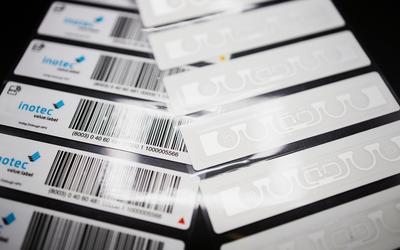
inotec offers premium RFID labels designed for standard applications, heavy‑duty environments and highly specialised use cases. All our solutions are tested under demanding real‑world conditions and are used millions of times worldwide. Each label is individually tailored, thoroughly inspected and engineered for maximum process reliability.
Our services cover the entire lifecycle: development, production, installation, training and long‑term support — ensuring reliable and efficient identification across a wide range of applications.
Quick Overview
Custom RFID Labels Designed to Your Exact Requirements
RFID Explained: The Key Principles of Contactless Identification
RFID transponders come with memory that can be written at least once and read an unlimited number of times.
This memory contains the unchangeable identity of the tagged object. In transponders with rewritable memory, additional data can be stored or updated during use — making them flexible for dynamic processes.
In general, RFID systems are divided into HF (High Frequency) and UHF (Ultra‑High Frequency). The main differences lie in reading range and the way data is transmitted, which is why each technology is suited to different applications.
For labelling purposes, companies mainly use passive RFID transponders. These tags operate entirely without an internal power source. Instead, they obtain all the energy they need through energy harvesting, drawing power from the electromagnetic field of the reader.
RFID tags operate in different frequency categories, including HF, LF and UHF
HF at 13.56 MHz
UHF at 865–869 MHz in the European frequency range (ETSI)
and 902–928 MHz in the US frequency range (FCC)
HF RFID – Secure information transfer in the near field
HF RFID operates in the 13.56 MHz frequency range and enables reliable, secure data transfer in the near field.
Through inductive coupling, the labels communicate stably with HF readers—supported by ISO standards 14443 and 15693, which are designed for either data security or data exchange depending on the application. With a typical read range from a few centimeters up to around one meter, HF RFID enables precise, controllable identification and is ideal for closed systems, sensitive processes, and security‑critical applications.
Applications of HF RFID labels
HF RFID is ideal wherever unique identification, data consistency, and controlled read ranges are critical. The technology is used in closed systems, in industry, in the healthcare sector, in asset management, and for access control or authentication processes. Thanks to stable reading conditions and high resistance to interference, HF RFID is the ideal choice for environments where security, precision, and traceability are paramount.
Potential of HF RFID labels
- Reliable identification of consumables, consumer goods, and operating resources in controlled environments
- Secure coupling with end devices and machines such as active boxes, terminals, or printing systems
- Improved user experience through automated and fast identification processes
- Optimized data management through stable, tamper‑resistant information exchange
- Support for transferring relevant product information for service, maintenance, and quality assurance
NFC technology for information and service applications
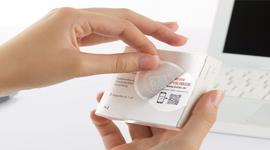
NFC is an HF RFID sub‑technology with a particularly short read range, designed for direct interaction between labels and smartphones or tablets.With a simple tap, NFC labels provide access to digital content, services, or user information, seamlessly connecting products with online experiences. This makes NFC the ideal choice for marketing, service applications, product information, customer engagement, and smart service processes.
Applications of NFC labels
NFC is particularly suitable for end‑user scenarios where information needs to be accessed intuitively via smartphone. Typical applications include product and service information, authentication, digital user manuals, smart packaging, marketing campaigns, payment solutions, tourism applications, as well as user interactions in retail and the cultural sector. NFC makes products interactive, smarter, and more service‑oriented.
Potential of NFC labels
- Direct access to information via smartphone – no app required, no barriers
- Ideal for marketing, customer engagement, and service journeys
- Opens the door to digital product worlds, tutorials, updates, and services
- Makes packaging, devices, and consumer goods interactive and smart
- Strengthens brand presence through a seamless user experience at the point of use
- Enables authentication, anti‑counterfeiting, and secure product release
Applications of UHF RFID labels
UHF RFID labels are suitable for the fast identification and tracking of goods, assets, or load carriers—even in high‑throughput environments. They support efficient tracking at gates, conveyor systems, or goods‑in areas, reduce cycle times, and enable automated, low‑error processes. Thanks to bulk reading capabilities, even large quantities of goods can be monitored reliably and in real time.
Unlocking the Full Potential of UHF RFID Technology
- Automation of inventory checks as well as goods and warehouse movements to reduce errors, incorrect postings, and shrinkage
- Real-time monitoring of complex supply chains for improved planning, quality, and end-to-end traceability
- Data-driven production processes enabled by precise WIP tracking, optimized workflows, and the implementation of modern smart factory scenarios
UHF RFID Technology: Extended Read Range and High‑Speed Bulk Identification
Unlike HF RFID, UHF RFID does not communicate via inductive coupling. Instead, it uses electromagnetic coupling in the higher frequency range between 860 and 960 MHz.
Data exchange takes place exclusively with RFID‑enabled readers. This allows communication over several meters — and enables the simultaneous reading of many tags at once (bulk reading).
Key Physical Requirements for the Application
Reliable readability without optical or physical contact
Defined read range — precisely matched to your infrastructure, whether for short‑ or long‑distance applications
Exact tuning to the application, substrate and environmental conditions
Compliance with all relevant norms and industry standards
Optimised performance in challenging environments, e.g. on metal surfaces or near liquids
Reading individual tags or multiple transponders simultaneously (bulk reading)
Secure and Reliable Identification with RFID Technology
Clear identification of each RFID tag through a factory‑assigned serial number
(UID for HF, TID for UHF)
Defined security mechanisms based on standardised ISO protocols
Write protection and controlled access to stored data
Multiple encryption modes to increase counterfeit protection
Tamper protection at label level, e.g. through break‑points or integrated tamper‑evident features
Tailored RFID Solutions for Maximum Performance in Every Environment
Thanks to extensive RFID expertise, inotec not only develops customised labels but also designs its own RFID antennas.
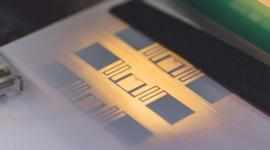
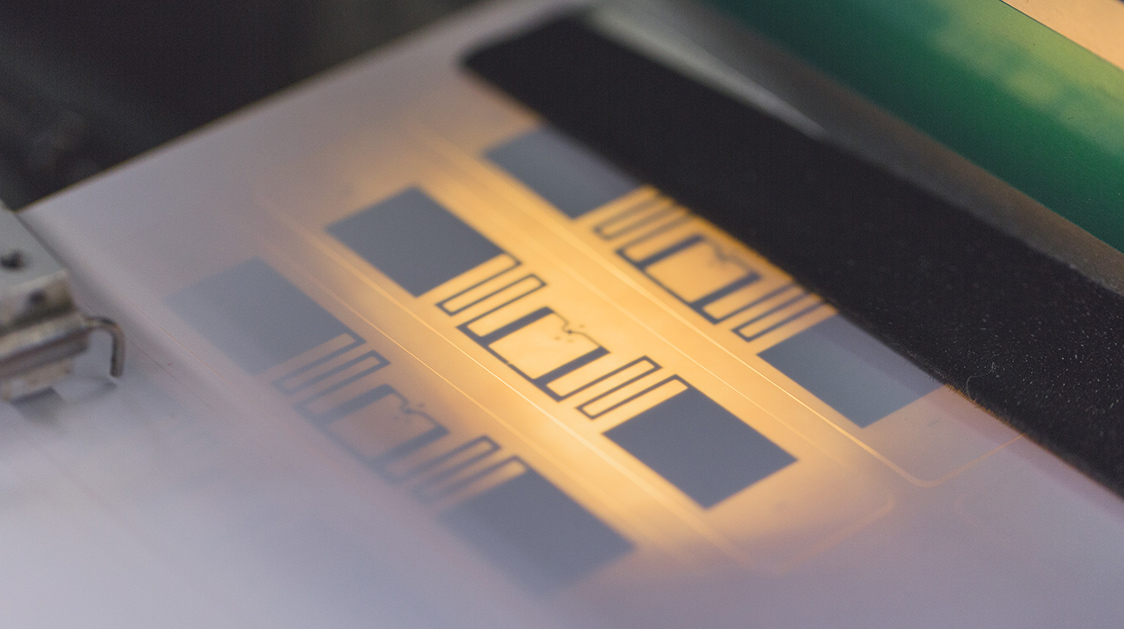
In the RFID Innovation Center, RFID inlays and antenna designs are precisely engineered and fine‑tuned for each specific application. The development process always considers the entire system environment — from substrate and installation conditions to read ranges and the customer’s infrastructure. The goal is always the same: a high‑performance, stable and perfectly matched RFID solution tailored to the individual requirement.
Antenna development closely linked to real‑world testing and validation
New antenna concepts are tested under realistic conditions in the RFID Innovation Center and are iteratively optimised to ensure reliable reading performance, even in demanding scenarios. These development capabilities are complemented by standardised measurement and testing procedures in accordance with ISO norms. This ensures that all RFID inlays and labels not only comply with the relevant standards but also provide long‑term process reliability.
The result: durable, precise and high‑performance RFID identification solutions
inotec delivers RFID solutions that adapt flexibly to a wide range of industries, use cases and technological requirements — from standard applications to highly complex, fully customised RFID systems.
Industry‑Specific Solutions
Industry‑Specific RFID Solutions
RFID for End‑to‑End Material Transparency and Process Automation
RFID labelling ensures smooth processes in logistics and supply chain management and enables smart transport workflows with fully automated operations.
Continuous tracking and real‑time monitoring of goods and containers significantly reduce inventory discrepancies and losses. At the same time, RFID speeds up goods handling, as workflows become faster, more reliable and far less error‑prone.
Thanks to precise ERP integration, inventory data is always up‑to‑date and trustworthy. In addition, the ongoing monitoring of returnable transport items (RTIs) ensures efficient control of returns, rotation and availability.
RFID Solutions for Consistent, High‑Quality Manufacturing Processes
In automotive production, workflows are clearly structured and highly predictable.
To avoid errors, ensure process reliability and continuously improve operations, RFID technology is widely used throughout the entire production environment.
Both on container level and directly on components, RFID labelling helps capture supply‑chain and material flows quickly and accurately. Parts can be uniquely identified at every step, ensuring smooth, efficient and traceable processes — from pre‑assembly to final production.
End‑to‑End Transparency and Process Safety Through RFID
Accuracy, efficiency and safety are top priorities in the healthcare sector.
Processes must be as reliable and straightforward as possible. RFID, as an intelligent and versatile labelling technology, offers a smart solution for a wide variety of medical applications.
Whether it’s providing patient information, tracking medical equipment or managing and identifying medications — the possibilities are extensive. Automation not only saves time and money, but in critical situations, it can even save lives.
Where RFID Is Used
Key Industries and Applications for RFID Labels
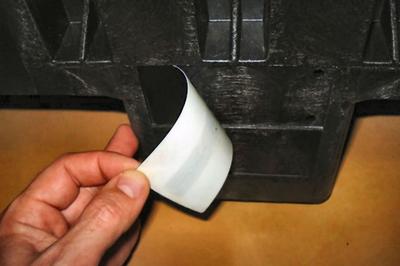
inotec’s RFID solutions for standard load conditions are used wherever component requirements are moderate.
These labels withstand light mechanical stress and are ideal for normal temperature ranges. They can also be wiped clean if exposed to moisture.
Different industries place different types of stress on identification systems. Which inotec solution is the best fit for the specific requirements is determined through expert consultation, ensuring every customer receives a solution tailored to their individual needs.
Real‑World Applications in Industry, Logistics and Retail
RFID labels can be used across a wide variety of sectors. Below are several examples from industry, retail, healthcare and sports:
- Vehicle identification and personal identification
(e.g., ID cards, passports, access control) - Authentication features for medications
- Labelling of printed circuit boards
- Applications in the textile and fashion industry, as well as for accessories and jewellery
- Animal identification
- Goods and inventory management
in logistics, libraries, archives and retail - Position tracking in industrial environments or hospital logistics
- Timekeeping, including high‑performance sports
- Waste management processes
- Access and authorization control
Robust Identification Labels for Harsh Environments
inotec offers RFID labels designed for specialised requirements where standard labels reach their limits.
Whether on metal surfaces (On-Metal) or in ESD‑sensitive environments, these solutions are engineered for reliable readability, exceptional durability and high process reliability under demanding conditions.
For unique or complex requirements, custom‑fit identification solutions are developed to ensure perfect performance in every application.
Labeling solutions
Barcode and RFID labels for different requirements
Features and Technical Specifications of RFID Labels
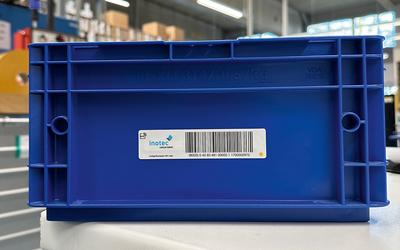
High‑quality RFID labels produced according to your individual requirements
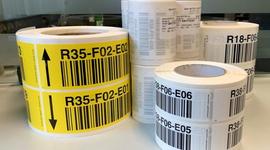
Available with high‑resolution digital printing, thermal transfer printing, or as blank labels
Choice of materials
Paper, polyester, polycarbonate and more
Custom adhesives for optimal bonding
or adhesive‑free cards and hang tags
Supported frequency ranges
UHF RFID ETSI (865–869 MHz), FCC (902–928 MHz), and HF 13.56 MHz
RFID chips available unprogrammed, pre‑programmed or encrypted
Integrated RFID in‑mould solutions
for maximum durability and compliance with hygiene requirements
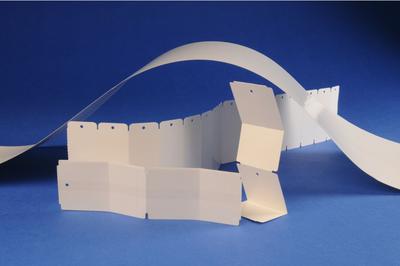
Always ready
Customised blank labels for all applications and every area of use
Always flexible and ready for use - with blank labels from inotec your project is in your own hands. There are almost no limits to your imagination. Because blank labels from inotec are available in almost every imaginable colour, shape, format and for almost every field of application.
Polyester, PP, PE, thermal transfer or direct thermal paper: Determine the number of labels per roll, the outer diameter, core or winding - completely individual and suitable for your printer. Even an individual perforation in the label or on the back is no problem for us. And of course you are completely free to design your blank labels in shape and size.
Of course, we offer the right ribbons for printing your labels as well as readers and other accessories for all areas of application.
Automate your processes with Smart Label and create more transparency. We are happy to finding the best options
Strong performance
What makes our Smart Labels particularly outstanding is their great flexibility in production. Depending on customer requirements, the RFID labels are available in both standardized and custom dimensions, such as materials with different adhesives and finishing options.
- Applications: e.g. shipping or product labeling
- Materials: Self-adhesive paper, tear-resistant composites, PE, PP, PVC, polyester, special materials
- Durability: Weather, acid, alkali, and temperature resistant (depending on material combination)
- Printing/Design Options: Including color printing, imprint and initialization service, perforations, die-cutting, and through-cutting
- Available formats: Standard and special shapes
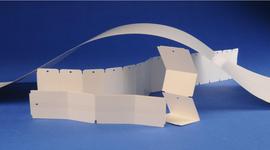
- Finishing: roll labels, continuous labels, folded leporellos, TAB labels, individual labels
- Customizing Service: Our Smart Labels pre-initialized, consecutively coded, or numbered upon request
Integrated transponder:
- Range: Technology, application, and environment dependent
- Frequency ranges: UHF: 860 MHz to 960 MHz, HF: 13.56 MHz, ISO: 15693 or 14443
- Chip manufacturer: NXP, Impinj, (more upon request)
- Data storage: Depends on chip (upon request)
Smart Tags are non-adhesive RFID hang tags and RFID cards. They are produced from high-quality cardboard and plastic materials. RFID Smart Tags can be customized, printed, and laminated.
Increase your efficiency and reduce costs and effort with RFID Smart Tags. We are happy to personally advise you on your benefits.
Strong performance
Due to our extensive manufacturing capabilities, we are able to meet even your most elaborate and complex requirements for the shape and design of RFID tags.
- Application Areas: e.g., clothing industry, production control
- Materials: Cardboard, tear-resistant composites, PE, PP, PVC, polyester, special materials
- Durability: Weather, acid, alkali, and temperature resistant (depending on material combination)
- Printing/Design Options: Including color printing, printing and initialization service, perforations, slits, punches, multilayer, security effects
- Available Formats: Up to 600 x 220 mm (special shapes/sizes available on request)
- Customization: Roll labels, continuous labels, folded fanfold labels, TAB labels, individual labels
- Individualization Service: On request, we offer our RFID Smart Tags pre-initialized, sequentially encoded, or numbered.
Integrated transponder
- Range: Dependent on technology, application, and environment
- Frequency Ranges:
- UHF: 860 MHz to 960 MHz
- HF: 13.56 MHz
- ISO: 15693 or 14443
- Chip Manufacturers: NXP, Impinj, (others available on request)
- Storage Capacity: Chip-dependent (available on request)
Are you looking for a transponder that fits perfectly on clothing, leather, and seat covers? Then the RFID Textile Tag from inotec is the perfect choice for you!
RFID Textile Tag: Improve your logistics and retail processes with precise product traceability and reliable proof of authenticity. We would be happy to personally present all the advantages of the RFID tag to you.
Strong performance
This EAS-compatible RFID transponder, developed by us and embedded in a nylon sandwich composite, ensures it won't come loose easily once it is sewn on.
- Application Areas: e.g., clothing industry, upholstery industry
- Materials: Special sandwich composite made of nylon (approx. 350µ)
- Adhesive: Special adhesive
- Durability: Weather and temperature resistant, not suitable for permanent industrial washing and drying processes
- Material Release Colorfastness: Dry cleaning: BS EN ISO-D01: 1995
- Printing/Design Options: Color printing, printing and initialization service
- Available Formats: On request
- Customization: Versatile for various hardware systems
- Individualization Service: On request, we offer our RFID Textile Tags pre-initialized, sequentially encoded, or numbered.
Integrated transponder
- Range: Dependent on technology, application, and environment
- Frequency Ranges:
- UHF: 860 MHz to 960 MHz
- HF: 13.56 MHz
- ISO: 15693 or 14443
- Chip Manufacturers: NXP, Impinj, (others available on request)
- Storage Capacity: Chip-dependent (available on request)
On‑Metal RFID Labelling Solutions
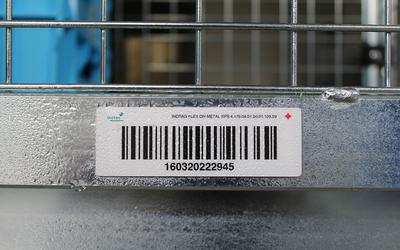
In a connected logistics environment shaped by global production and complex supply chains, efficiency across every stage of the supply chain is becoming increasingly important.
inotec RFID labels ensure reliable performance on metallic surfaces thanks to their specially designed on‑metal RFID antenna, which is precisely tuned for optimal functionality on metal.
Our AutoID labels and tags can be used globally, as they cover both the ETSI and FCC frequency ranges while delivering excellent performance values in each.
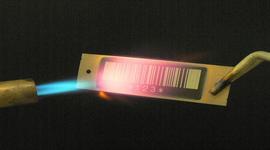
Whether exposed to strong mechanical or chemical stress, inotec RFID labels for metal applications are built to last. They withstand high temperatures, direct UV radiation and can be cleaned at high temperatures and under high pressure. This makes them perfectly suited for outdoor use and other demanding environments.
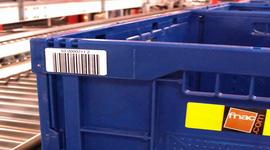
RFID In‑Mould Labels: Key Characteristics and Areas of Application
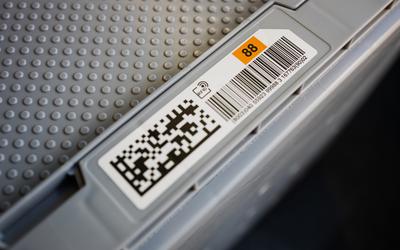
The Advantages:
- Patented identification solution enhanced with RFID functionality
- Combination of Auto‑ID elements (barcode, human‑readable text, antenna and chip)
- Data readability from a distance or without line‑of‑sight
- Secure, permanent integration into reusable transport packaging — even with RFID technology
- High robustness and outstanding durability
- Meets strict requirements of the food and pharmaceutical industries
- GS1‑certified solution for reusable containers and meat crates
- Enables continuous, permanent inventory of reusable transport packaging
2D Barcode vs. RFID – What Suits Your Application Best
The right solution is selected based on the desired level of automation, the required information density and the specific process environment.
Whether you rely on classic methods or smart technologies, each identification system has its own strengths depending on the application. Every approach offers unique advantages that come into play where they fit best.
1D Barcode Technology: Key Features and Industry Application
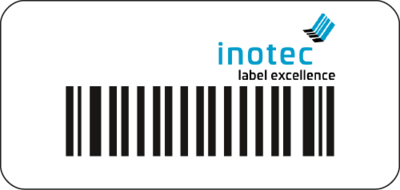
Advantages
- Proven for decades
- Compatible with all existing 1D and 2D scanners across the entire supply chain
- Easy to produce and reproduce
- Low‑cost scanning technology
Disadvantages
- Holds only a very limited amount of information
- Requires relatively large space on the label
- Readability may be impaired by scratches, dirt or surface damage
2D Code Technology: Key Features and Industry Applications
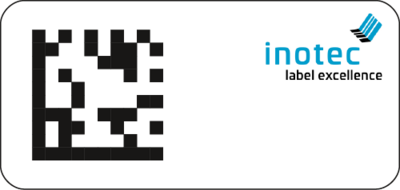
Advantages
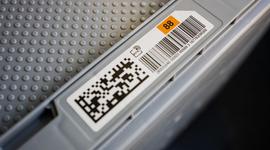
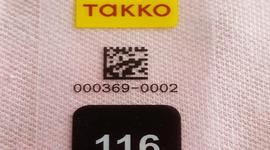
- Higher information density possible (up to 3,000 characters)
- Requires far less space on the label compared to 1D barcodes while holding significantly more data
- Scanning with 2D camera systems enables greater read distances
- High tolerance to damage (up to 30% of the code can be destroyed) while still ensuring 100% readability
- Bulk reading possible using specialised camera systems — for stacked items or pallets
- Ideal for consumer information and marketing applications (e.g., QR codes)
- 2D scanners can also read 1D barcodes
Disadvantages
- Existing 1D barcode infrastructure cannot be reused for 2D codes
- 2D scanners are more expensive than simple 1D barcode scanners
- Light reflections and changing lighting conditions must be taken into account when using cameras
- Camera systems require regular cleaning to ensure perfect read results
- No protection against tampering — codes can be copied at any time
- 2D security codes require real‑time database access for verification
RFID: Key Features and Typical Application Areas
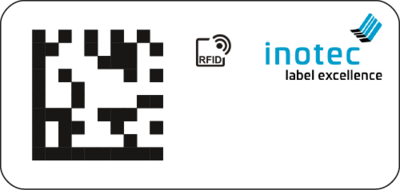
Advantages
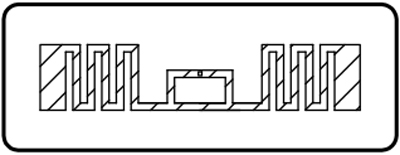
- RFID can be combined with any existing 1D or 2D codes in a single label
- RFID HF & UHF standards are ISO‑certified worldwide
- Smart labels offer individual memory for both variable and fixed data
- Passive RFID labels require no battery and last for several years without replacement
- RFID enables flexible communication directly from the label into the system
- Bulk reading allows fully automated scanning of many objects at once
- No line‑of‑sight required — RFID can be detected through various surfaces and packaging
- Scratches and weathering do not affect RFID readability
- Tamper protection through the chip’s unique UID and the option to encrypt stored data
- RFID readers are resistant to dirt and contamination
Disadvantages
- RFID requires precise clarification of all conditions, environmental factors and process workflows
- In many cases, an on‑site RFID feasibility study is necessary
- RFID needs new (additional) reading technologies — both fixed and mobile
- RFID chips are more sensitive to strong electrostatic discharge or direct mechanical impact
Key Advantages at a Glance
Smart RFID Solutions That Deliver True Added Value
inotec develops RFID solutions that fit your processes perfectly — from chip selection to antenna design and label layout.
Our experts provide vendor‑independent and application‑neutral consulting, analyse your use cases directly on site, and deliver a concept that balances performance, cost and scalability in the best possible way.
Before a solution goes into production, it undergoes comprehensive validation under real‑world conditions.
inotec tests the performance, readability and durability of the RFID identification system — including temperature, chemical and mechanical stress tests. This ensures that the RFID solution operates reliably in everyday use and maintains consistent performance throughout its entire intended service life.
inotec supports you from initial setup all the way to stable, long‑term operation.
We assist with hardware setup, label rollout and serialization logic, and can take over replenishment and inventory management on request. With our service and maintenance packages, we ensure long‑term system availability and reliable performance.