Skip to the navigation Skip to the content

For the Thalia project, a robust, sustainable, and process-reliable reusable container solution was required to meet the demands of modern retail logistics. As the leading bookseller in the Germanspeaking market, Thalia continues to increase its market share in both brick-and-mortar retail and e-commerce.

Together, Georg Utz GmbH and inotec developed a solution that reliably combines high circulation volumes, secure goods movements, and efficient logistics processes. The project demonstrates how transparency, automation, and sustainability can be successfully integrated through a coordinated system solution.

About Georg Utz GmbH

Georg Utz GmbH develops durable, reusable packaging and container solutions for industrial and retail applications. In the Thalia project, the focus was on a customized reusable container solution specifically designed to meet the requirements of one of the largest bookselling companies in the DACH region (Germany, Austria, and Switzerland).

Initial Situation

To supply a large number of retail stores, a solution was required that not only supports the safe and sustainable use of reusable containers, but also improves transparency, control, and efficiency throughout logistics operations. 

A key requirement was the reliable identification of containers to enable the clear recording, tracking, and efficient management of goods movements, particularly within automated processes. 

Key requirements:

  • Unique identification and complete traceability of containers
  • Greater transparency and control throughout the entire supply chain
  • Increased efficiency in automated logistics and sorting processes
  • Reduction of manual data capture steps and potential sources of error
  • Reliable protection of transported goods 

The objective was therefore to implement a solution that effectively combines identification, process reliability, and sustainability in a single, integrated approach.

The inotec solution

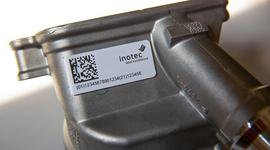
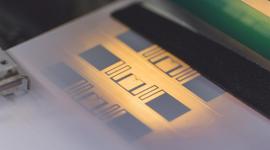
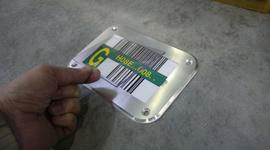
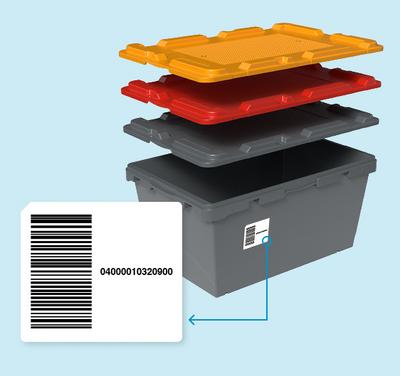
In the Thalia project, Georg Utz GmbH relies on reusable containers equipped with RFID in-mold labels from inotec. These labels combine a barcode, RFID antenna, and RFID chip in a permanently integrated identification solution, providing the foundation for reliable identification in automated logistics processes. 

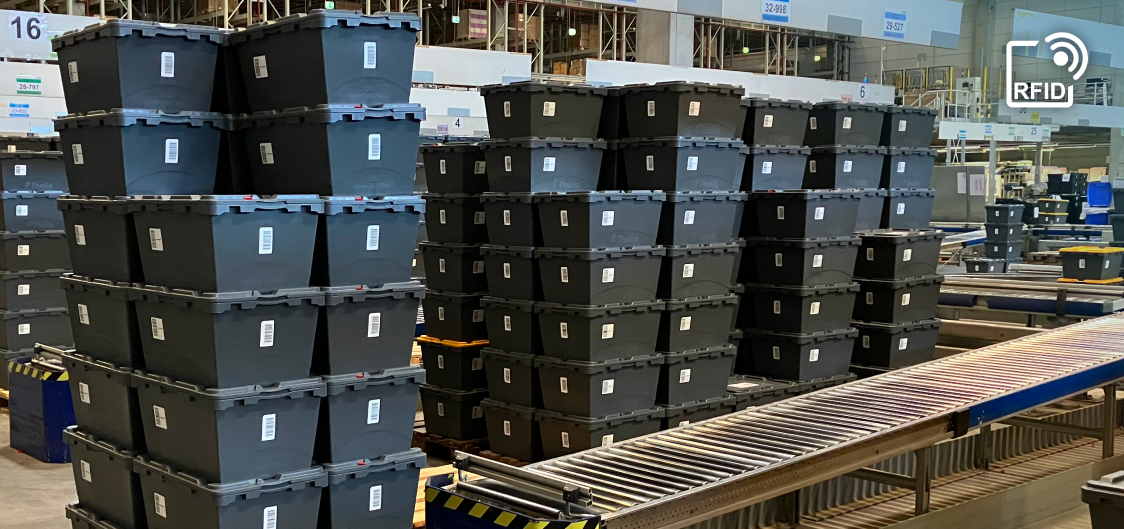
The containers used in the project are specifically designed for space-saving return logistics and can be nested when empty. However, this design places special demands on the identification technology, as the integrated labels come into very close proximity when the containers are stacked. 

While conventional reusable containers typically provide sufficient spacing between individual RFID labels, nestable systems create extremely small distances between adjacent labels, sometimes resulting in critical overlap geometries. This has a direct impact on RFID performance:

  • Mutual interference between RFID antennas
  • Attenuation and shielding of radio signals
  • Increased requirements for reader infrastructure and gate design

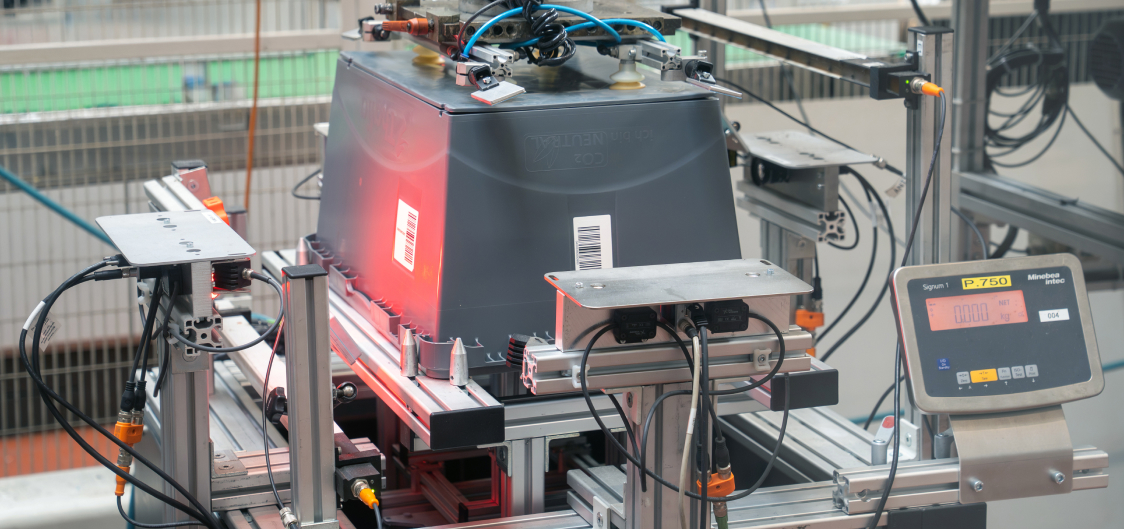
At the same time, large quantities of containers must be captured reliably in bulk. At Thalia, this means up to 120 containers per reading cycle.

To address these challenges, a specially adapted RFID inmould label was developed that:

  • is permanently integrated into the container during the injection molding process
  • offers high mechanical durability and resistance to wear
  • combines multiple identification technologies (RFID + barcode) 

Rather than using a standard label, the development focused on an application-specific optimization tailored to the requirements of the project, including:

  • antenna design for minimal label spacing
  • a defined position within the injection mold
  • reliable readability, even when containers are stacked 

As a result, Thalia benefits from significant operational improvements. Container movements can be tracked more transparently, captured more quickly, and managed more efficiently. RFID technology enables fast and reliable bulk reading, while reducing manual scanning processes and minimizing potential sources of error. 

Thanks to the tamper-resistant design and rapid data transfer, dependable information is available at all times. Extensive testing and the targeted integration of in-mould technology and RFID ensured that all project-specific requirements were successfully met.


Key features:

  • RFID-enabled identification: Unique identification and full traceability of every container
  • Optimized for automation: Fast data capture and seamless integration into existing logistics processes
  • Reduced error rates: Fewer manual interventions, resulting in more stable and reliable operations
  • Space-saving design: Nestable containers reduce transport volume and simplify handling

Label qualification

A specially developed RFID in-mold label was selected to meet the project‘s specific requirements. The combination of barcode and RFID technology provides permanently reliable identification and enables fast, secure data capture throughout the entire supply chain. 

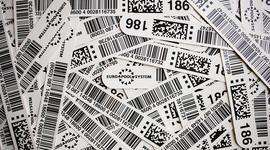
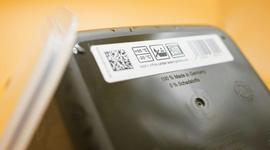
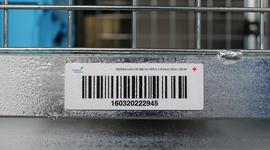
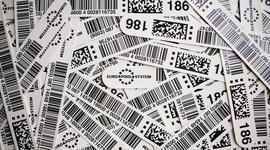
Each container is marked using a set of four labels: two in-mold labels, each featuring a Code 128 barcode, and two RFID inmold labels that also incorporate a Code 128 barcode. This combination supports both visual and RFID-based identification, ensuring flexibility across different process steps and data capture methods. 

During the injection molding process, the label is permanently integrated into the container, forming an inseparable bond with the carrier. As a result, the identification solution offers exceptional resistance to water, chemicals, UV exposure, and mechanical stress while also being tamper-proof. This durability supports high circulation volumes and contributes to the long-term economic viability of the reusable container system. 

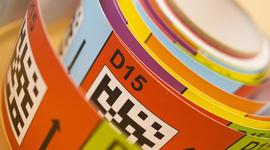
To facilitate processing on Georg Utz production equipment, the in-mold labels were manufactured and supplied as a fourlabel set in four separate stacks. A key requirement was that all four stacks remained perfectly synchronized, ensuring the correct numbering sequence and guaranteeing the unique identification of every individual container.

Project implementation

The project was implemented through close collaboration among all stakeholders and with clearly defined objectives. Despite a demanding timeline, the development, production, and delivery of the containers were successfully completed. 

The solution was seamlessly integrated into existing processes, resulting in a noticeable simplification and stabilization of logistics operations. In particular, enhanced transparency, reduced error rates, and the space-saving container design contribute to more efficient management of goods flows.

By using durable reusable containers made from high-quality recycled materials, the project helps reduce the reliance on single-use packaging and supports the conservation of valuable resources.

Conclusion

The Thalia project demonstrates how customized reusable container solutions can be successfully aligned with the demands of modern retail logistics. 

The combination of RFID-enabled transparency, reliable identification technology, efficient container design, and robust construction delivers an economical and sustainable solution for day-to-day operations, while providing the flexibility required to meet future logistics challenges and evolving business needs.