









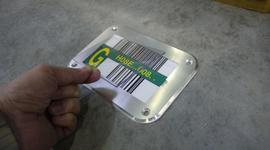





Reliable identification across all your processes

inotec’s RFID solutions enable clear and reliable identification and authentication of products and components across the entire supply chain – in production as well as during product use. The integrated RFID tracking system supports seamless inspection and reliably protects against counterfeiting, tampering, and theft. This ensures consistent quality control, secure processes, and full traceability.
Industries & Applications
With NFC technology, you inform your target audiences faster, better, and more cost-effectively. NFC labels open up completely new, previously unimagined communication possibilities and proximity to the customer.
- Tickets that can be paid for with a mobile phone.
- Products that provide access to additional information.
- Posters that turn into interactive games.
Intelligent system that thinks along with you
CHECK ID – Smart RFID tracking system for more efficient production
CHECK ID is a unique combination of label, antenna, reader and system solution – all tailored to your specific application. The smart RFID tracking system from a single source delivers real value through seamless integration into your processes. This helps you strengthen customer loyalty, secure your spare parts and accessories business and efficiently increase your revenue.
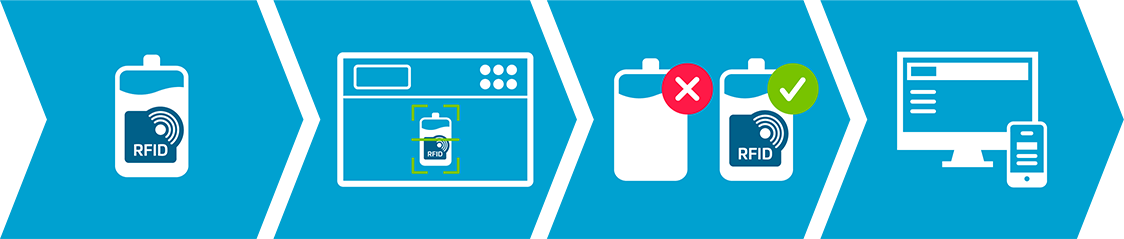
Areas of application
CHECK ID in real‑world use

Safe use, optimal documentation, and time‑limited material usage in combination with technical devices are essential in the healthcare sector.
CHECK ID optimises the following areas:
Medical accessories
Enhanced usage safety through RFID solutions for breathing tubes, endoscopes, filter cartridges, reusable bottles, pipettes, and more.
Medical materials
Reliable identification and tracking of reagents, liquids, serums, pastes, gases, cleaning systems, Petri dishes, prosthetics, and other medical materials.
Medical services
RFID‑based support for cleaning and disinfection processes, system activation for approved use, detailed usage documentation, and patient monitoring directly within the system.

Hygiene systems can easily be manipulated—for example, by diluting consumables or using them for too long. By communicating directly with the system, a one‑time, process‑safe use of the material is reliably ensured.
Washing systems with consumables
In washing systems, a defined amount of detergent is required from a dosing unit for each wash cycle. The cartridge is connected directly to the system or washing machine and cannot be removed and reused in the same or another system from the manufacturer. This ensures controlled usage and prevents misuse.
Disinfection systems
By integrating a tank, canister, or cartridge into a disinfection system, original consumables are automatically released for use, and their usage can be time‑limited. The dosing quantity can also be precisely controlled. Refilling is only possible with approval from the manufacturer, ensuring maximum safety and compliance.
Filter systems
Filter systems always have a defined service life and must be replaced once this period has expired. Through communication between the filter and the system, this time frame can be clearly defined and monitored. If the limit is exceeded, the filter can be automatically locked. At the same time, the use of original filters is reliably ensured.
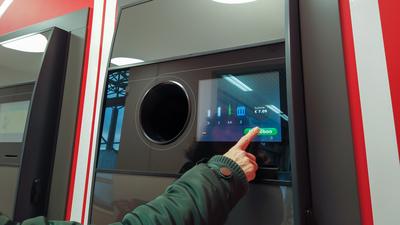
In retail, reusable containers and packaging are being used more and more frequently. Long‑term use without high losses is only possible with secure deposit or refill systems.
Dispensing and return systems
Deposit and material dispensing machines can use RFID to reliably identify reusable packaging and automatically book items in and out. Unlike printed codes, RFID completely eliminates manipulation of deposits and prevents fraud.
Refill stations
Serialized pool or reusable packaging can be refilled directly by end consumers. RFID enables tamper‑proof identification of the reusable unit at the refill station—without the need for cameras, which are often affected by dirt or incorrect alignment. Combined with visible coding, each unit can also be securely processed and booked at the checkout.

In hospitality as well as the service and catering sector, automated systems and reuse packaging are increasingly being adopted. This development is driven not only by changing staffing conditions, but also by rising customer expectations and new regulatory requirements.
One key factor: Only packaging with serialised identification provides the level of security required for reliable, compliant operation within automated processes.
- Secure use of consumables in chain catering: In many food service applications where food is processed in machines or automated systems, precise process control is essential. Intelligent labelling solutions make it possible to strictly enforce the maximum permitted usage time of components. Example:A milk cartridge used in a coffee machine may be used for a maximum of four days. Thanks to smart communication between the cartridge and the machine, the cartridge is automatically deactivated once this period expires. Even if the cartridge is still partially filled, it can no longer be used in any compatible device.This automated enforcement of shelf‑life rules improves product safety, ensures compliance, and significantly reduces operator effort.
- Catering: automated issue and return systems: Trays, bowls, and containers can be automatically identified, filled, and recorded using RFID technology. During filling, the contents are automatically assigned to the specific container and charged directly to the customer’s account at the checkout or vending system.When containers are returned, RFID automatically re‑registers them in the system, digitally mapping the entire reuse cycle. Manipulation of deposits or balances is reliably prevented with RFID, unlike conventional printed codes.The result: fully automated processes, maximum security, and complete transparency for both operators and customers.
- Beverage refill stations: Serialised containers allow end users to refill their bottles independently and securely. RFID enables tamper‑proof identification of the container – without the need for complex camera systems.Dirt, moisture, or incorrect positioning at the refill station are not an issue, as RFID works without line‑of‑sight and reliably detects and authorises the original container.This technology reduces waiting times, increases throughput, and ensures smoother operations – especially at events or high‑traffic locations – resulting in higher customer satisfaction.

- Activation of consumables at the machine: Original consumables can be detected and activated directly by the machine. The material unit is identified using RFID in a tamper‑proof way – without the need for camera systems, which are often affected by dirt or incorrect positioning. Once the material is removed, it is automatically marked as “used” and can no longer be manipulated or reused. This ensures maximum security and reliable handling of original materials throughout the process.
- Process control driven by the material:Ensuring the correct use of materials is a major challenge in industrial environments. Operators are often unable to reliably distinguish which materials are suitable for a specific job – leading to costly errors, rework, or downtime. With RFID‑based material control, the machine automatically registers the material, checks it against the job requirements, and only releases production if the match is correct. This guarantees that the right material is used for the right task – every time.
- Reuse in industrial applications: Materials such as tapes, clips, films, fabrics, tiles, and similar items are often processed on reels, spools, or in magazines within machines and equipment.By using RFID‑enabled reuse spools, cores, or magazines, material activation can be automated and process reliability significantly increased. These reuse units also verify originality and prevent manipulation, for example in deposit or return systems operated by the customer.The result: fully automated material handling, higher process security, and reliable protection against misuse or fraud – even in demanding industrial reuse scenarios.
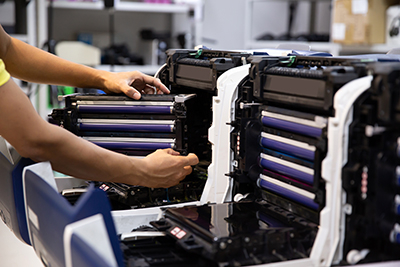
- RFID-based activation of orginal printing materials: As soon as a material unit is inserted into the printing system, the machine clearly identifies the original material via RFID and activates it for the print process. This unique identification prevents the use of unauthorised materials and significantly increases operational safety. Once the material is removed, it is automatically marked as “consumed”, ensuring it cannot be reused in other printing systems. This reliably protects both the process and the business model.
- Process control through smart printing materials: In industrial printing, the correct assignment of materials to print jobs is often error‑prone and costly. Operators cannot always clearly identify which material is intended for which job, leading to waste, reprints, or quality issues.inotec addresses this challenge with automated material verification directly at the machine. The inserted material is detected, compared with the job data, and only released if it matches the requirements. This ensures that only the correct material is used – improving efficiency, print quality, and overall process reliability.
- Reuse in the printing industry: Modern industrial printing systems increasingly process materials such as inks, pastes, or 3D‑printing cartridges in automated workflows. With RFID‑based activation directly at the machine, reuse containers or smart cartridges can be clearly identified and efficiently managed. This approach reduces costs, increases process security, and prevents manipulation – especially in deposit‑based systems. At the same time, it ensures that only original materials are used, even in complex and highly automated printing environments.
Advantages at a Glance
Reliable Processes Through Secure Identification
More Security for You
With CHECK ID, every process and component fits perfectly into place. The integrated RFID tracking system is tamper‑proof and is custom‑designed and implemented to match your workflows - ensuring the highest standards of quality and security.
More Authenticity for You
With CHECK ID, every product is clearly identifiable. Our integrated, closed‑loop RFID tracking system automatically and reliably detects originals, prevents tampering, and reduces errors to a minimum.

Added Value for Your Customers
Efficiency, Security and Transparency
- More efficiency through error‑free processes and automated inventory management
- More security thanks to automatic product verification and seamless documentation
- More service with automatic reordering and on‑time delivery
- More connectivity through the digitalization of a smart, fully integrated end‑to‑end solution