











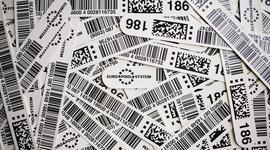
Customized barcode and 2D code labels
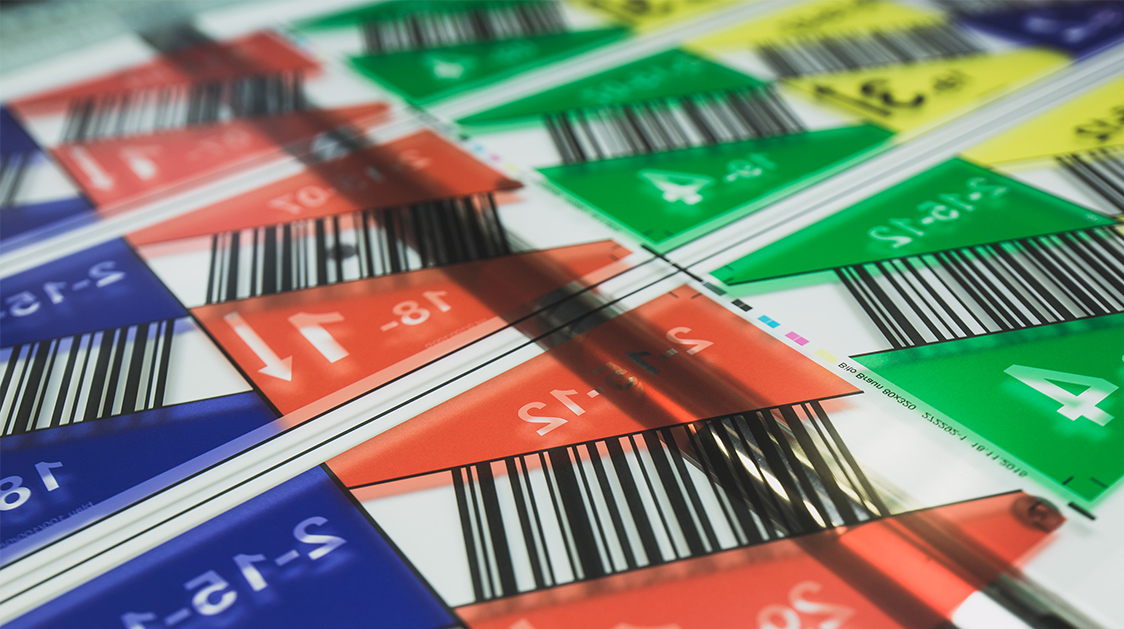
In inventory management, warehousing, or on products and components, high‑quality barcode and 2D code labels are indispensable.
They ensure full transparency at all times and enable the reliable storage of essential information. inotec labels stand out through their high quality, durability and precise customisation, guaranteeing clear and unmistakable identification.
Key Facts at a Glance
Barcode Essentials
The Basics: How Linear Barcodes Work
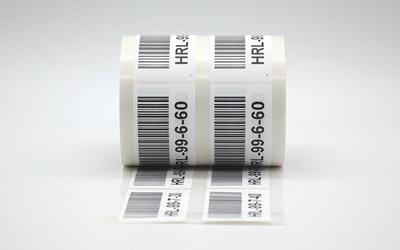
A barcode (also called a linear code) is an optoelectronically readable script made up of parallel lines and spaces of varying widths.
In this context, the term “code” does not refer to encryption, but to the representation of data using binary symbols. The information contained in a barcode is read automatically by barcode scanners or camera systems and then processed further by the corresponding software.
There are both 1D barcode types with two bar widths and others with multiple bar widths.
A barcode must meet certain minimum height requirements, which in some cases are standardised. The width ratio between narrow and wide bars is also defined by standards and typically ranges from 1:1.8 to 1:3.4 (although 1:2.0 to 1:3.0 should normally be used; the wider range represents permitted tolerances).
Multi‑width barcodes generally use bar widths that increase in increments of a single module. In addition, a clear area — the so‑called quiet zone — must appear before and after the code to ensure proper decoding.
Bars are commonly referred to as “bars”, while the spaces between them are called “spaces.” Most codes begin and end with a start or stop character, which allows the scanner to determine both the barcode type and the reading direction.
However, there are exceptions — for example, the Pharma Code and Laetus Code, which do not use start and stop symbols. In other barcode types, such as the EAN code, the start and stop symbols are identical; the reading direction is determined by the unique encoding of the symbol patterns, which differ between forward and reverse reading.
Certain applications require a specialised form of a barcode type.
For example, some barcodes can be printed “over‑square”, meaning they are taller than they are wide. This allows two scanners positioned at a right angle to each other to read the code in any orientation. Such formats are commonly used on airline baggage tags.
Another variation is the T‑shaped barcode. Here, two barcodes with identical content are printed in a T‑shape. This enables reliable reading from any direction using only a single scanner.
Reliable Barcode Solutions for a Wide Range of Applications
Barcodes make identification fast, secure and efficient.
They ensure unique product identification, enable error‑free data capture and support transparent workflows in warehousing, logistics, production and sales.
Key Benefits
- Clear product and part identification for maximum safety
- Error‑free data capture in seconds using a scanner
- Optimised warehouse and inventory management through real‑time tracking
- Traceability and compliance for every batch, product and component
- Accelerated processes across logistics, shipping, production and sales
- Easy integration into ERP, inventory management and logistics systems
- Flexible combination with RFID, QR codes or mobile applications
- Suitable across all industries: manufacturing, retail, e‑commerce, healthcare, automotive, food and more
With barcodes from inotec, companies increase efficiency, transparency and process reliability — ensuring smooth operations and long‑term business success.
Barcodes offer maximum security for products, processes and data.
They prevent mix‑ups, ensure full traceability and support compliance with legal requirements — a decisive advantage across all industries.
Thanks to their unique identification capability, products, components and batches can be clearly assigned, helping to prevent tampering. Automated scanning reduces manual mistakes and guarantees error‑free data transfer into warehouse, production or logistics systems. Modern security features on barcode labels offer additional protection against counterfeiting and ensure compliance with standards such as GS1.
With barcode solutions from inotec, companies benefit from transparent processes, secure workflows and maximum traceability — ensuring greater safety throughout the entire supply chain.
To ensure reliable barcode performance, material and printing technology play a crucial role.
At inotec, we use high‑quality label materials and modern printing technologies to guarantee that barcodes remain permanently readable, durable and scannable — even under extreme conditions.
Choosing the Right Materials with inotec
- Paper labels for short‑term identification and standard applications
- Film materials such as polyester, polypropylene or PVC for durable, tear‑resistant, water‑ and chemical‑resistant labels
- Speciality materials for heat‑ or temperature‑resistant labelling, as well as removable variants
- Various adhesive types tailored to substrate, environmental conditions and durability requirements
Modern printing technologies are used in the production process:
- Digital printing for long‑lasting, abrasion‑ and chemical‑resistant barcodes — ideal for industrial, warehouse and logistics applications
- Thermal transfer printing for less demanding applications
- Inkjet printing for simple, high‑volume applications
This ensures that inotec barcodes are not only readable and reliable, but also resistant to environmental influences such as heat, moisture, chemicals and abrasion.
Standards‑compliant barcodes — such as GS1‑approved formats or QR codes — provide worldwide compatibility and seamless integration into ERP, inventory management and logistics systems.
With inotec’s customised materials and advanced printing technologies, barcodes remain efficient, secure and long‑lasting at all times — for optimal identification and maximum process reliability.
Tailored Solutions for Every Industry
Barcode solutions for various industries
Barcode labelling is a key element for precise identification and efficient process control in industry, logistics and retail.
inotec provides specialised barcode labelling solutions that have been tested under demanding conditions and proven millions of times in real‑world use.
inotec products are ideal for warehouse management, logistics, inventory control and many other specialised applications. Every barcode label is manufactured with high precision, ensuring clear identification and exceptional durability — even under mechanical or chemical stress.
The result: reliable, efficient and scalable labelling for all application areas.
Key Areas of Application
Barcode Label Applications Across Industries
Labels for Everyday Barcode Applications
inotec barcode labels for standard load conditions are ideal for applications with light mechanical stress and normal ambient temperatures.
They are scratch‑resistant, easy to wipe clean and reliably suitable for a wide range of everyday applications.
Which barcode solution best fits specific requirements is determined through expert, individual consulting, ensuring that every application receives an optimal, needs‑based labelling setup.
High‑Durability Barcode Labels for Tough Environments
For applications exposed to heavy mechanical or chemical stress, inotec offers barcode labels designed for high‑load environments.
These labels withstand high temperatures, are UV‑resistant and can therefore be used reliably in outdoor areas. They are engineered for cleaning processes at elevated temperatures or under high pressure, and are also suitable for use in sterilisation procedures.
Robust Barcode Labelling Solutions for Demanding Use Cases
inotec barcode labels are the ideal solution for specialised applications with exceptionally high demands.
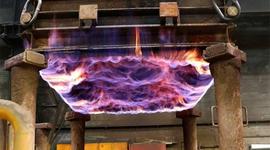
They are used in environments where standard labels simply can’t perform. Whether exposed to extreme mechanical or chemical stress, very low temperatures (e.g., shock freezing), or extremely high temperatures of up to 1,400 °C, as well as radiation sterilisation processes — inotec’s specialised barcode solutions can handle it all.
These labels are engineered for use in long production cycles, repeated aggressive cleaning procedures, and seasonal outdoor weather conditions, ensuring maximum durability and reliable readability under even the harshest circumstances.
Barcode/2D-Code or RFID?
inotec identification systems ensure maximum process reliability and provide a robust foundation for long‑term efficiency and sustainable business operations.
1D Barcode Technology: Key Features and Industry Applications
Advantages
- Proven for decades
- Compatible with all existing 1D and 2D scanners across the supply chain
- Easy to produce and reproduce
- Low‑cost scanning technology
Disadvantages
- Contains only a very limited amount of information
- Requires relatively large space on the label
- Readability may be impaired by scratches, dirt or surface marks
2D Code Technology: Features, Functions and Application
Advantages
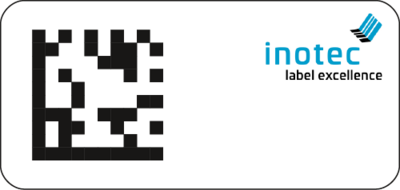
- Higher information density possible (up to 3,000 characters)
- Requires significantly less label space compared to 1D barcodes while storing much more data
- Scanning with 2D camera systems enables greater read ranges
- High tolerance to damage — up to 30% of the code can be destroyed while still allowing 100% readability
- Bulk reading possible using specialised camera systems (e.g., for stacks or pallet loads)
- Well suited for consumer information and marketing purposes (e.g., QR codes)
- 2D scanners can also read 1D barcodes, ensuring full backwards compatibility
Disadvantages
- Existing 1D barcode infrastructure cannot be reused for 2D codes
- 2D scanners are more expensive to purchase
- Light reflections and changing lighting conditions must be considered with camera-based systems
- Camera lenses require regular cleaning to ensure optimal scanning performance
- No inherent tamper protection — codes can be copied at any time
- 2D security codes require real‑time database connectivity for verification
RFID: Key Features and Typical Applications
Advantages
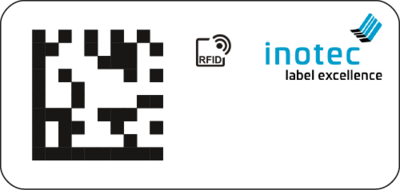
- RFID can be combined with all existing 1D and 2D codes within a single label
- RFID HF & UHF standards are ISO‑certified worldwide
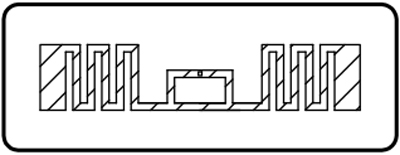
- Smart labels offer individual memory for both variable and fixed data
- Passive RFID labels require no battery and operate for many years without replacement
- RFID enables flexible communication directly from the label into the system
- Bulk reading allows fully automated scanning of many objects simultaneously
- No line‑of‑sight needed — RFID can be detected through various surfaces or packaging
- Scratches and weathering do not affect RFID readability
- Tamper protection through the chip’s unique UID and optional data encryption
- RFID readers are resistant to dirt and contamination
Disadvantages
- RFID requires careful clarification of all conditions, environmental factors and process workflows
- In many cases, an on‑site RFID feasibility study is necessary
- RFID requires new (additional) reading technologies — both fixed and mobile
- RFID chips are more sensitive to strong electrostatic discharge or direct mechanical impact
Key Advantages at a Glance
Features & Benefits of Our Identification Technology
Barcode solutions provide complete transparency of inventory and supply flows.
With real‑time tracking, you gain seamless control across the entire supply chain — from storage and picking to shipping. This ensures that logistics processes become more precise, more efficient and reliably traceable at every step.