















Seamless transparency across the entire supply chain

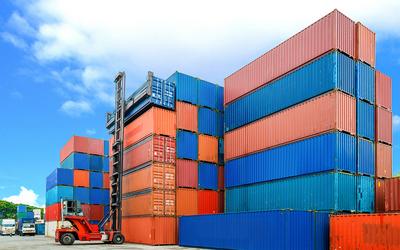
In times of complex supply chains, global flows of goods and increasing quality requirements, track & trace systems are a key component of modern logistics and production processes. Companies need to know at all times where an object is located, what condition it is in and which process step it has passed through. This is exactly where inotec’s track & trace solutions stand out – reliable, robust and ideally suited for demanding industrial environments.
Using state-of-the-art label technologies, patented special products and a broad portfolio of barcode and RFID solutions, inotec creates the basis for transparent processes, higher efficiency and reliable traceability in transport, logistics and production. The combination of innovative technology, personal consultation and decades of expertise makes inotec a leading partner for track & trace in demanding industrial, retail and service environments.
Why is Track & Trace so important?
Transparency, security and efficiency in complex supply chains
Through seamless traceability, real-time transparency is created: movements of goods can be tracked from goods receipt through to delivery, sources of error are reduced and data-driven decisions are made easier. At the same time, track & trace technologies increase efficiency and process reliability, as bottlenecks and delays become immediately visible. inotec’s robust Auto-ID technology ensures precise and stable processes throughout.
In addition, Track & Trace systems form the foundation for digitalisation and Industry 4.0: automated workflows, AI‑supported analyses and efficient resource management only work with clear identification and consistent data capture. Modern RFID and code label technologies from inotec enable exactly these data‑driven process chains.
Track & Trace solutions also play a key role in quality assurance and risk reduction. They support efficient recalls, meet documentation requirements, and help lower costs. At the same time, they create a clear competitive advantage: greater transparency, faster processes, and reliable proof increase service quality and sustainably boost customer satisfaction.
Industry solutions
Track & Trace solutions for industry‑specific requirements
In industrial manufacturing, Track & Trace ensures maximum transparency across every production step. For work‑in‑progress (WIP) processes, parts, components, and finished goods are clearly labelled, making them easy to identify and reliably track. Even extreme conditions such as heat, moisture, chemicals, or mechanical stress are no problem. As a result, companies increase process reliability, reduce scrap, and lay the foundation for efficient, fully digitalised production chains.
In the automotive industry and mechanical engineering, the traceability of complex assemblies is essential. Track & Trace enables seamless quality control, reduces the risk of faulty parts, and makes it easier to respond quickly to recalls. Manufacturers benefit from precise documentation, greater process stability, and better control over their supply chains – a key competitive advantage in highly regulated markets.
These industries work with highly sensitive and, in some cases, safety‑critical components. Track & Trace prevents mix‑ups, minimises downtime risks, and ensures that every part meets exact specifications. At the same time, companies comply with regulatory requirements and safeguard quality in highly technology‑driven fields such as sensor technology, microelectronics, and medical devices.
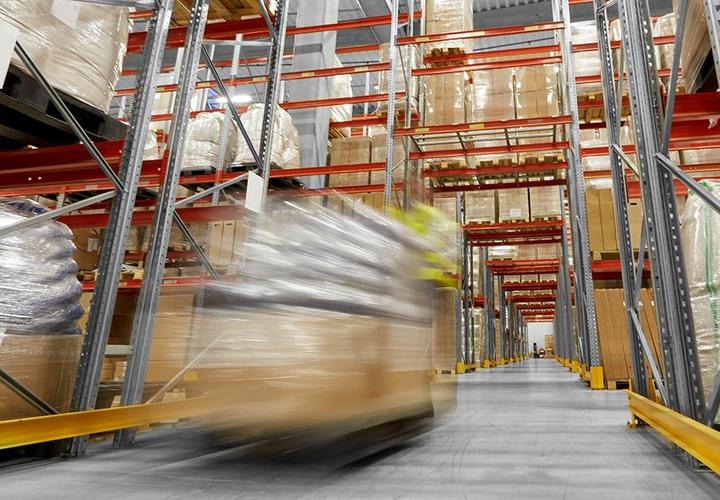
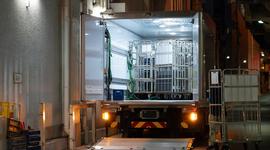
In dynamic supply chains and reusable systems, Track & Trace delivers complete transparency. Companies always know where pallets, containers, and shipping units are, can analyse usage frequency, and spot potential losses early on. This increases efficiency and planning reliability while reducing costs in picking and cross‑docking. Clear identification of containers, transport boxes, and pooling systems also enables closed, efficient loops and sustainably minimises losses.
Strict legal requirements apply in these industries – traceability is mandatory. Track & Trace ensures compliance with regulatory standards, enables complete documentation, and supports fast, efficient recall processes. With transparent batch tracking, clean data, and secure identification, companies protect consumers, safeguard product quality, and minimise risks across sensitive supply chains.
In fast‑moving sales markets, Track & Trace plays a key role in inventory management, fast delivery times, and protection against counterfeiting. Retailers benefit from clear, inventory‑ and transport‑related insights, while customers gain greater transparency throughout the entire customer journey. Track & Trace also enables a seamless connection between online and offline processes, boosting efficiency and enhancing customer satisfaction.
Application areas
End‑to‑end traceability across the entire value chain
Track & Trace for reusable containers, pallets, and load carriers
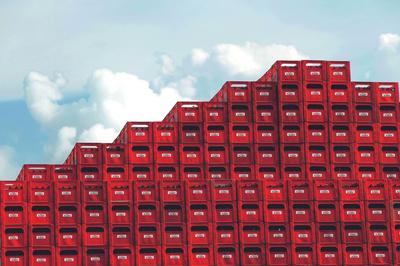
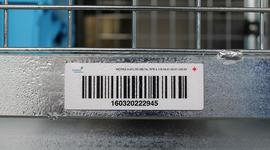
Container labelling enables seamless tracking of reusable containers, transport boxes, and pallets, ensuring transparent and efficient logistics processes. Thanks to robust, durable labels, containers remain clearly identifiable even under demanding conditions. This reduces losses, optimises circulation cycles, and creates the foundation for stable, efficient loops in transport and production.

Unique identification and serialisation of batches
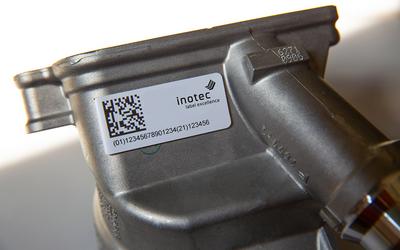
Batch identification makes it easy to clearly identify components, batches, and finished products, creating full transparency across production. It helps companies consistently meet quality standards, spot potential issues early, and track manufacturing processes end to end. The result: greater safety, smoother workflows, and a solid foundation for efficient, modern production chains.
Requirements
Technical, regulatory, and process-related requirements and framework conditions
Long-lasting durability for reliable traceability, even under extreme conditions
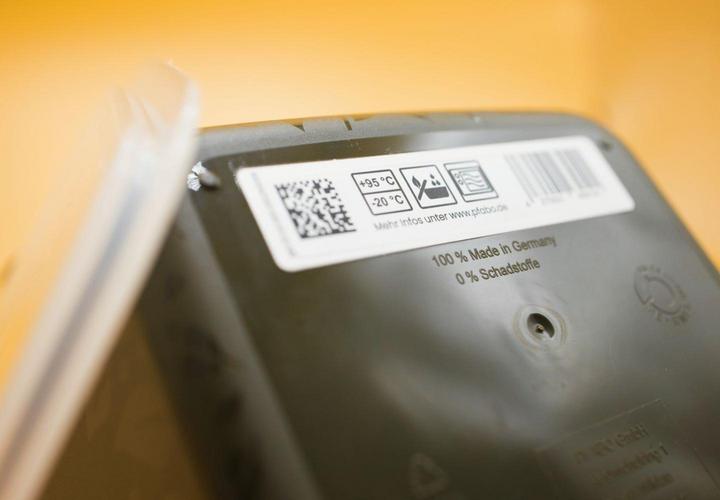
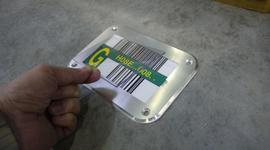
Labels used for Track & Trace must remain permanently readable, even under demanding conditions such as heat, cold, moisture, steam, chemicals, alkaline cleaning agents, or ultrasonic cleaning. At the same time, they need to adhere reliably to a wide range of surfaces, including plastic, metal, wood, glass, as well as textured or rough materials. To achieve this, specially matched adhesive systems, protective laminates, or in‑mould label solutions are used to ensure maximum durability.
In logistics, production, and reusable packaging processes, labels must also be scratch‑resistant, wipe‑proof, and able to withstand friction, impact, and abrasion. Even after many reuse cycles, they need to stay fully intact and readable-ensuring precise, secure, and long‑term stable identification at every stage of the process.
Seamless integration of Track & Trace labels into production and logistics processes
Track & Trace labels need to be designed so they can be marked quickly and accurately, support automated and reliable reading, and work flawlessly at every automated station. Key factors include individually configurable memory sizes, precise chip programming directly during production, and flexible material options. This ensures seamless, inotec‑side integration into existing logistics- and productionprocesses without disrupting workflows.
Stable barcode and RFID performance for clear and reliable identification
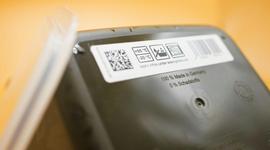
Reliable traceability requires clear and unambiguous identification at all times. This includes high‑contrast, abrasion‑resistant barcodes, permanently stored RFID data, and unique coding for every container, component, or load carrier. At the same time, RFID labels must deliver stable radio performance and comply with standardised frequencies—such as UHF 860–960 MHz or HF 13.56 MHz—to ensure precise and secure reading at every step of the process.
System‑compatible labeling for Auto‑ID, compliance, and full supply chain transparency
Labels must integrate seamlessly into existing Auto‑ID processes, software systems, and logistics loops. This means they need to be fully compatible with both bulk RFID reading and documentation‑critical environments such as food or pharmaceutical applications. In addition, the right labeling solutions meet all relevant legal requirements and standards—ensuring secure, transparent, and process‑reliable traceability at all times.