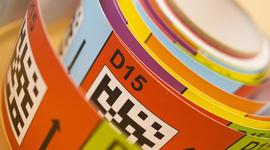
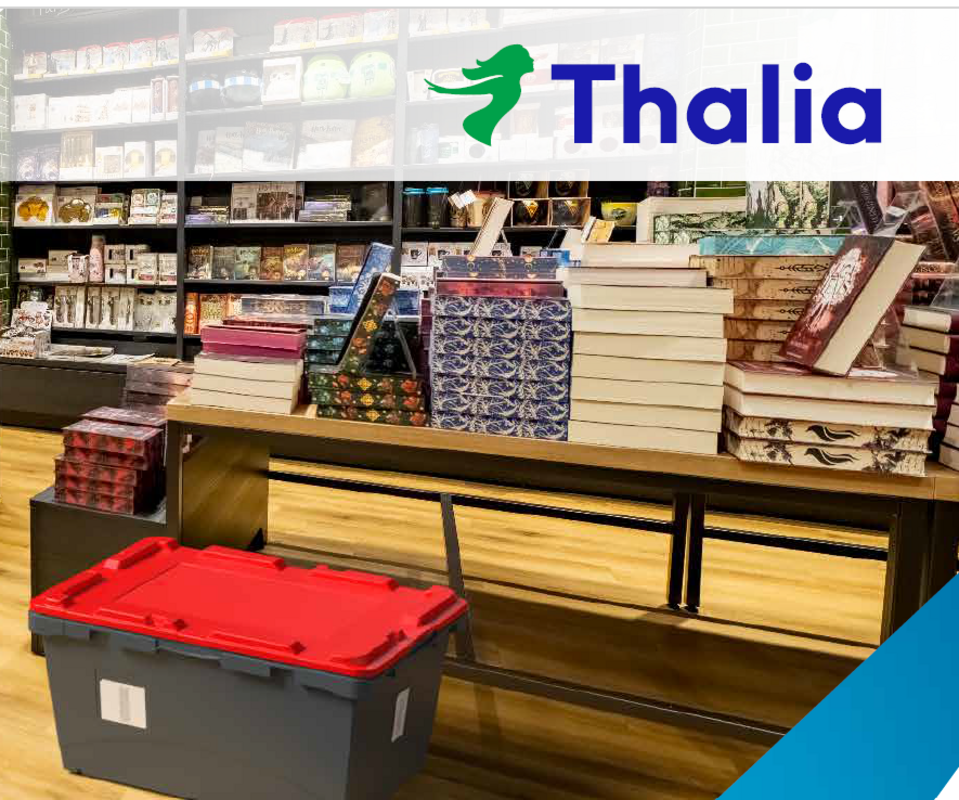
Efficiently returning reusable containers, nesting them to save space, and reliably identifying them at all times: what sounds simple presents a particular challenge for RFID technology.
For the Thalia project, Georg Utz GmbH needed an identification solution that would perform reliably even when containers are nested closely together, while enabling large quantities of containers to be captured accurately in bulk.
With an application-specific RFID In-Mould Label, inotec developed exactly the right solution for these demanding requirements.
We make AutoID work. Even where standard solutions reach their limits
How can nestable reusable containers be transported efficiently while still ensuring reliable RFID identification? Together with Georg Utz GmbH, inotec developed an identification solution for the Thalia project that combines RFID performance, process reliability and durability.
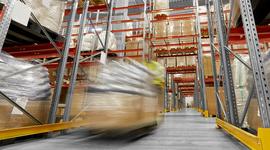
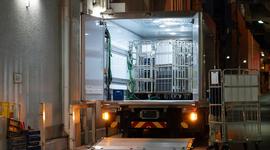
Supplying numerous Thalia stores required a reusable container solution capable of meeting the demands of modern, increasingly automated retail logistics. In addition to protecting goods during transport, transparency, traceability and efficient management of container movements were key requirements.
The challenge was clear: every container had to be uniquely identifiable, manual scanning processes needed to be reduced, and large quantities of containers had to be captured quickly and reliably.
Nestable containers present a particular RFID challenge
The reusable containers developed by Georg Utz can be nested when empty, significantly reducing the space required for transport and return logistics. While this is a major advantage from a logistics perspective, it presents a particular technical challenge for RFID identification.
When the containers are stacked, the integrated RFID labels are positioned very close to one another. This can cause mutual interference between the antennas and lead to attenuation or shielding of the radio waves. At the same time, the application at Thalia requires up to 120 containers to be reliably identified in a single reading process.
A standard solution was therefore not an option.
An RFID In-Mould Label developed specifically for the application
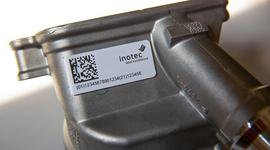
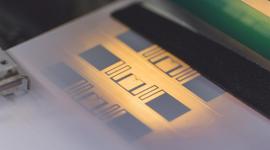
inotec developed a specially adapted RFID In-Mould Label for this application. The focus was on an antenna design optimised for the short distances between the labels, a precisely defined installation position and reliable readability even when the containers are stacked.
The identification solution is permanently integrated into the container during the injection moulding process, creating a durable bond between the label and the container. The label is protected against water, chemicals, UV radiation and mechanical stress, making it ideally suited for the high number of cycles required in a reusable system.
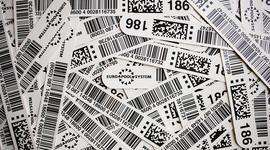
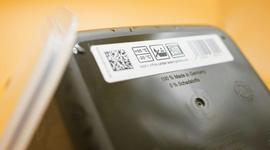
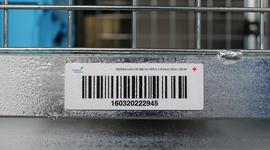
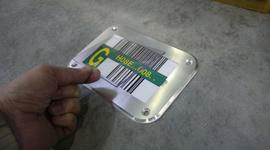
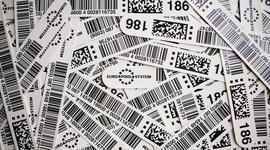
Barcode and RFID technologies complement each other. Each container is equipped with a four-label set consisting of two In-Mould Labels with Code 128 barcodes and two RFID In-Mould Labels, also featuring Code 128 barcodes. This allows the identification method to be adapted flexibly to different process steps and scanning requirements.
Greater transparency, fewer manual processes
For Thalia, the combination of reusable containers and RFID In-Mould identification delivers one key benefit: greater transparency throughout the container cycle.
Container movements can be captured faster and managed more efficiently. RFID bulk reading reduces manual scanning and therefore potential sources of error. At the same time, the durable identification solution supports the long-term economic viability of the reusable system across a high number of cycles.
Sustainability and process efficiency also go hand in hand. Nestable containers reduce transport volume during return logistics, while durable reusable containers and the use of high-quality recycled materials help reduce single-use packaging and conserve resources.
When AutoID becomes an integral part of the container solution
The project demonstrates that reliable AutoID in demanding reusable applications goes far beyond simply selecting an RFID label. What matters is the interaction between container design, material, installation position, antenna design, RFID performance and the actual conditions within the logistics process.
This is precisely where inotec comes in: with identification solutions that are not only technically reliable, but developed from the outset for the specific application.
We make AutoID work