




















Ensure full compliance with the requirements of the EU Packaging Directive

The European Packaging and Packaging Waste Regulation (PPWR) establishes new mandatory requirements for all packaging within the EU.
Starting August 12, 2026, comprehensive requirements will apply to:
- Reusability
- Strong focus on reuse systems and traceability
- Labeling
- EU-wide harmonized labels
- Recyclability/Design for Recycling
- Documentation and record-keeping
Companies must systematically collect and document packaging data. The goal of the regulation is to reduce packaging waste and establish a functioning circular economy
General questions
Information on the new EU Regulation
The PPWR is fundamentally changing the requirements for packaging.
In addition to material and design specifications, the following aspects in particular are coming into focus:
- Unique identification of packaging
- End-to-end traceability
- Structured data collection
- Continuous proof of compliance
As a result, packaging is no longer viewed merely as a physical product, but as a data-driven system component.
The PPWR calls for EU-wide harmonised labelling that provides information on materials, recycling and use. Labelling is therefore a regulatory requirement.
At the same time, companies must be able to:
- Clearly identify packaging
- Document circulation and use
- Provide evidence for audits
Consistent labelling thus forms the basis for:
- Reusable systems
- Circular processes
- Regulatory compliance
PPWR and Reusable Packaging: What You Need to Know
Key requirements explained
The regulation provides a clear impetus for the expansion of reusable systems.
Key requirements for reusable packaging:
- Permanent identification of each container
- Tracking of circulation
- Integration into return and pooling systems
- High durability of the marking
Implementing PPWR correctly – with the right labeling solutions
How inotec puts transparency, traceability and compliance into practice
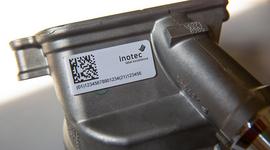
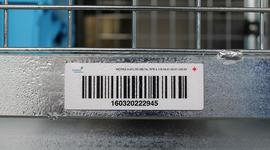
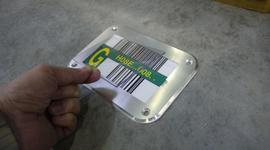
inotec provides the technological foundations for reliably implementing the requirements of the PPWR in practice. The focus is on durable labelling solutions for reusable packaging, RFID and auto-ID technologies for end-to-end traceability, and in-mould integrations for permanent identification directly on the packaging carrier.
These technologies create the conditions for uniquely identifying packaging across multiple cycles, automatically recording movement data, and ensuring the required transparency in reusable and circular systems. Combined with IDS process consultancy, this results in holistic solutions that not only cover technical labelling but also enable its integration into processes, data structures and compliance requirements.
The result is transparent packaging flows, automated data capture and a robust basis for regulatory compliance in accordance with the PPWR.
Data-Driven Proof of Compliance
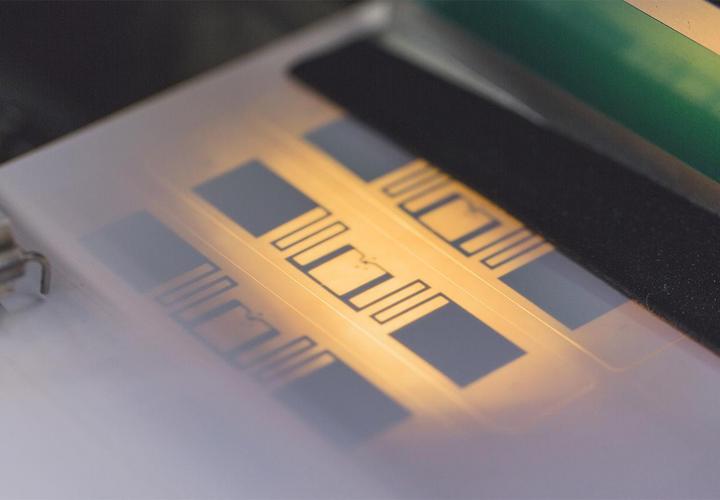
RFID enables automated, contactless identification and captures movement and usage data in real time.
- Automated identification and documentation for seamless workflows
- Contactless data capture for fast and efficient operations
- End-to-end, real-time tracking of reusable containers
- Supports reporting, compliance, and audit requirements



FAQ
Frequently Asked Questions (FAQs)
The PPWR was introduced to:
Reduce packaging waste across Europe
Improve recyclability of packaging materials
Strengthen the circular economy
These goals are part of the European Green Deal and aim to tackle the growing amount of packaging waste in Europe while promoting more sustainable and resource-efficient packaging solutions.
The requirements of the PPWR are being introduced step by step—but they will already impact market access from 2026 onward.
This means businesses are facing several key challenges:
Managing complex data requirements
Adapting internal processes and workflows
Integrating suppliers and the entire supply chain
Starting early makes a big difference. It helps you reduce risks, control costs, and avoid major last-minute operational changes.
In short, early preparation gives you the time to build efficient, compliant systems and stay ahead of the competition.
The PPWR is a directly applicable EU regulation, replacing the previous Packaging Directive. This means the same rules now apply uniformly across all EU member states—without national interpretation or variation.
Compared to the old directive, the PPWR is:
Legally binding without the need for national implementation
More detailed and operational in its requirements
Strongly focused on concrete proof, data, and traceability
In short, the PPWR introduces clearer, stricter, and more consistent rules, making compliance more transparent—but also more demanding for businesses.
Packaging must be designed so that its materials can be efficiently separated and recycled in real-world processes.
Over time, non-recyclable packaging will no longer be allowed on the market, making recyclability a key requirement for all packaging placed in the EU.
In short, the focus is on creating packaging that can actually be reused or recycled in practice—not just in theory.
Packaging must be designed so that it can be easily recycled in real-world systems. This includes:
Using the right materials that are suitable for recycling
Designing components that can be easily separated
Supporting existing recycling processes and infrastructure
From 2030 onwards, non-recyclable packaging will no longer be allowed on the market, making “Design for Recycling” a critical requirement for compliance.
In short, packaging needs to be simple, compatible, and built for efficient recycling from the start.
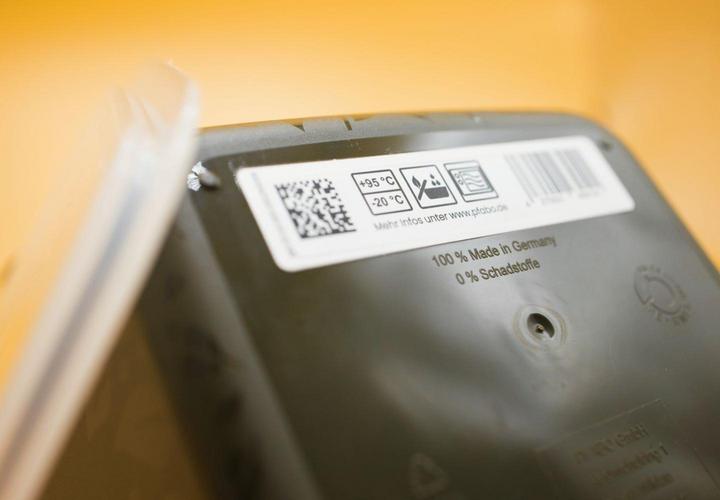
Labeling is becoming mandatory and a core part of PPWR compliance.
In the future, packaging must:
Be clearly identifiable at all times
Provide clear consumer information about materials and proper disposal
Ensure full traceability across the entire supply chain
This makes labeling essential for transparency, recycling, and regulatory compliance—helping both businesses and consumers handle packaging correctly.
In short, labeling is no longer optional—it’s a key requirement for smart, compliant, and sustainable packaging systems.
Inotec offers durable barcode and RFID labeling solutions, in-mould integrations for reusable containers, and advanced tracking and traceability systems.
This creates:
Transparent packaging flows across the entire supply chain
Automated processes with minimal manual effort
A reliable, data-driven foundation for PPWR-compliant operations
The PPWR shifts the focus from packaging itself to data-driven proof of compliance. It’s no longer just about what your packaging looks like—it’s about the data behind it.
Digital identifiers make this possible by enabling:
Automated data capture with minimal manual effort
Real-time tracking of packaging flows across the supply chain
Reliable support for compliance reporting and documentation
The Declaration of Conformity (DoC) is the key proof document under the PPWR.
It confirms that:
All relevant regulatory requirements are fully met
The declaration is linked to a specific packaging design
Comprehensive technical documentation is in place behind the scenes
Without a valid DoC, packaging can no longer be legally placed on the market in the EU.
The PPWR doesn’t just require compliance—it requires proof of compliance. That means it’s not enough to implement the rules—you also need to document and demonstrate it with clear data.
Companies must:
Capture and manage packaging data in a central system
Integrate supplier data across the entire value chain
Have compliance documentation ready at any time
Without reliable and accessible data, market access can be at risk.
Possible consequences include:
Loss of market access in the EU
Fines and financial penalties
Disruptions in your supply chain
Since the PPWR applies directly across all EU member states, there’s no room for national interpretation or flexibility. That makes compliance essential for doing business in the EU.